




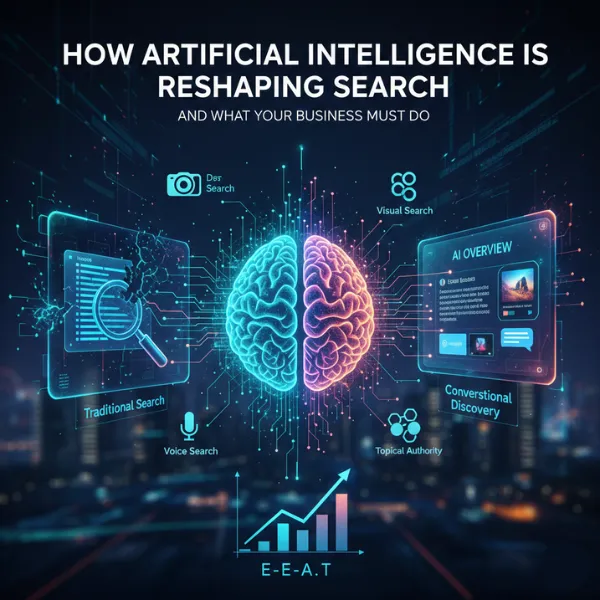
Artificial intelligence (AI) is no longer a futuristic concept in search engine optimization. In 2026, AI is a core part of Google’s algorithm and search experience. For businesses, marketers, and SEO professionals, understanding the latest AI trends in SEO is essential to stay visible, competitive, and future-ready.
Recent changes in search behavior, algorithm updates, and the rise of AI-powered search engines mean that traditional SEO tactics alone will not deliver results. The landscape is shifting toward AI-driven discovery, answer-first search, and new ways of delivering value to users.
This guide outlines the key AI trends shaping SEO in 2026 and explains how your business can adapt.
One of the biggest developments in SEO is the emergence of AI Overviews and AI-driven answers. Instead of traditional “ten blue links,” search results increasingly include AI generated summaries and answers that provide information directly on the results page.
This trend means that simply optimizing for traditional rankings is not enough. Instead, you must optimize for AI visibility so that your content becomes the source of those answers.
Actionable Tip: Focus your content on clear, authoritative information that AI systems can extract and cite directly.
SEO in 2026 requires a shift from simple keyword targeting to topic clusters, user intent, and semantic relevance. AI systems are much better at understanding context and meaning than before.
Search engines increasingly reward content that demonstrates deep understanding and relevance to user queries. This means planning content around central themes and answering related questions comprehensively. Actionable Tip: Build content structures that use topic clusters with related subtopics rather than isolated keyword pages.
Google’s algorithm and AI systems prioritise content that shows Experience, Expertise, Authoritativeness, and Trustworthiness (E-E-A-T).
AI search engines are more likely to cite, reference, and surface sources that clearly demonstrate authority and credibility. This is especially important for businesses in competitive sectors like technology, healthcare, finance, and local services.
Actionable Tip: Include author bios, clear credentials, testimonials, and citations to trusted sources.
In 2026, user experience becomes even more critical to SEO success. AI models use
engagement signals like time on page, scroll depth, and question resolution to evaluate content relevance and satisfaction.
Slow pages, unreadable layouts, and confusing navigation reduce AI-driven visibility. AI engines reward content that answers queries efficiently and keeps users engaged.
Actionable Tip: Improve page speed, ensure mobile optimisation, and structure content for readability with clear headings and visuals.
Digital marketers now have access to specialised tools and benchmarks that measure AI search performance, AI referrals, and AI-driven visibility.
These benchmarks help businesses understand where they lead and lag in AI search performance, enabling data-driven optimisation plans.
Actionable Tip: Use tools that track AI overview appearances, citation counts by AI systems, and competitive AI visibility metrics.
AI can analyse patterns in user queries, behaviour, and market trends to predict what users will search for next. Predictive SEO uses these insights to proactively optimise content before trends peak. This forward-looking approach helps you capture organic visibility ahead of competitors and align content with emerging search demands.
Actionable Tip: Analyse search intent trends and update content calendars quarterly to match predicted search themes.
While Google remains a dominant search engine, AI platforms such as Bing Copilot, ChatGPT, Gemini, and Perplexity are gaining usage for answers, product recommendations, and discovery.
This means SEO strategy must extend beyond Google to include optimisation for AI assistants and conversational search.
Actionable Tip: Build content that is structured for multi-platform AI consumption, such as FAQs, structured data, and answer-friendly sections.
To recap, the following trends are reshaping SEO through AI:
Here are practical steps to align your SEO strategy with 2026 AI trends:
1. Produce Deep, Valuable Content: Create content that answers questions thoroughly and offers insight that AI systems can extract.
2. Employ Topic Clusters: Organise content around central themes and related subtopics to improve context and semantic relevance.
3.Strengthen Brand Signals: Show credibility with E-E-A-T elements such as author expertise, case studies, and citations.
4.Improve Page Experience: Make your website fast, user friendly, and mobile optimised to satisfy AI-driven engagement signals.
5. Monitor AI Visibility: Track how often your brand is cited by AI search features and adjust your strategy accordingly.
AI trends in SEO 2026 are redefining how search works. Search engines now prioritise understanding user intent, contextual relevance, and trustworthy information rather than simple keyword matches. To succeed in this new era, businesses must adopt a multi-dimensional SEO approach that combines AI-driven optimisation, brand authority, and exceptional user.
If you want, I can also provide a meta title and description, section for FAQs, or social media snippets tailored for this blog. Just let me know your next requirement.






Leave A Reply Now